
Can You Be Sued For Performing First Aid
Picture a Saturday afternoon at Cielo Vista Mall, or the parking lot of a grocery store on the West Side: someone collapses and you are the nearest person. The instinct to help fires immediately — and then a second thought arrives right behind it. What if I do something wrong? What if I hurt them, and their family comes after me legally? That concern has frozen bystanders across El Paso and across the country at the exact moment when moving would save a life. Fear of legal liability is one of the most documented reasons people do not step forward when they witness a cardiac arrest.
The short answer is that performing CPR or basic first aid in Texas exposes a bystander to very little legal risk, and under most circumstances, almost none at all. But the fear is not simply about probability. It is about not understanding the framework — and understanding it is what replaces hesitation with action.
Why People Fear Helping
The fear of being sued for first aid comes from a few different places. One is general distrust of legal unpredictability — even if you did everything right, someone could still file a lawsuit and pull you into an expensive process. Another is uncertainty about whether you are performing the technique correctly. A third is the specific worry about physical harm: CPR breaks ribs in many cases, and the person who called 911 and tried to help is now associated with that injury in the minds of a grieving family.
None of these concerns are irrational, but they reflect a misunderstanding of how liability works in emergency situations. The legal system draws a clear distinction between a bystander who tried to save someone and a professional who made a preventable clinical error. Texas law was specifically written to address this gap.
Upcoming CPR Class Dates and Times
How Texas Law Protects You: §74.151
Texas Civil Practice and Remedies Code §74.151 — the Texas Good Samaritan Act — provides civil immunity to a person who administers emergency care in good faith, at the scene of an emergency, without expectation of compensation. This is the statute that applies to an El Paso resident who stops to help a stranger at a traffic accident on I-10, a coworker who collapses in a break room at a manufacturing plant on the East Side, or a neighbor found unresponsive in a home near the Franklin Mountains.
Applied to CPR specifically: if you see someone collapse, start chest compressions, and the person does not survive, Texas §74.151 is what shields you from a civil suit. The same applies if you break a rib during compressions — which happens frequently during effective CPR and is entirely expected. Courts understand this. Rib fractures from CPR are not evidence of negligence; they are evidence that compressions were deep enough to actually move blood. No Texas case has successfully held a lay bystander liable for performing CPR in good faith.
AED use falls under the same protection. If you locate an AED in a public building, follow the device’s voice prompts, and apply it during a genuine cardiac emergency, you are acting within the statute’s protection. The federal Cardiac Arrest Survival Act adds another layer of protection for AED use in qualifying settings.
What Good Faith Means in an Emergency
The phrase “good faith” is the pivot point of the Texas statute, and it is worth understanding what it actually requires.
Good faith means you believed someone needed help and you acted to provide it. Your motivation was to assist, not to cause harm or act recklessly. It does not mean you performed every technique perfectly. It does not require certification. It does not require that the person survived, or even that your intervention helped. The standard is intent and reasonable effort, evaluated against what a reasonable person with your level of training would have done in the same situation.
A construction worker on a Fort Bliss contractor site who has never taken a CPR class, who calls 911 and performs hands-only compressions as best he can, is acting in good faith. A certified EMT off-duty at a quinceañera in Ysleta who responds to a guest who collapses is also acting in good faith — off-duty licensed professionals who respond voluntarily to an unrelated emergency generally retain Good Samaritan protection for reasonable first-aid actions taken outside their professional scope. Both are protected under §74.151. The person who would not be protected is someone whose conduct crossed into gross negligence — reckless indifference to safety, not imperfect technique under pressure.
What Falls Outside Protection
Texas §74.151, like all Good Samaritan statutes, does not provide unlimited protection. Gross negligence — conduct so reckless it rises to conscious disregard for safety — is excluded. In practice, this standard is very difficult to meet for a bystander attempting CPR. The conduct would need to be so far outside reasonable bounds that it looks nothing like a genuine rescue attempt. Performing imperfect compressions in a high-stress parking lot emergency is nowhere near that threshold.
Compensation changes the analysis. The statute protects voluntary, uncompensated care. A professional in the middle of a paid engagement — a private duty nurse responding to a patient, a physician seeing a patient in their clinic — would be evaluated under different standards, not Good Samaritan immunity. Off-duty professionals who stop voluntarily at an unrelated emergency occupy a different category and are generally protected.
The statute governs civil liability only. It does not touch criminal law. For the vast majority of first aid scenarios, this distinction is entirely irrelevant. The only time it becomes relevant is for conduct reckless enough to fall outside Good Samaritan protection in the first place.
Why Training Still Matters
None of this is an argument against getting trained. If anything, training makes Good Samaritan protection more complete, more confident, and less theoretical.
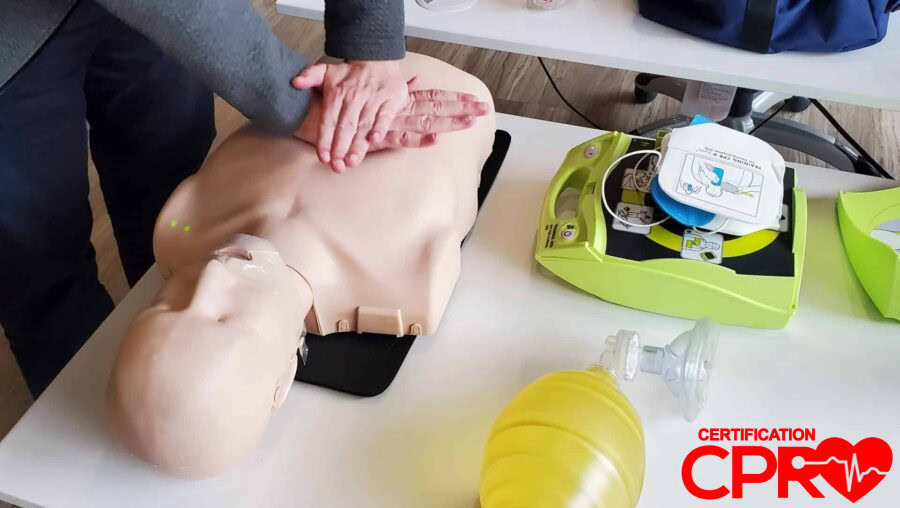
When you are trained, “reasonable care” is easier to demonstrate because you know what reasonable care looks like. You know the correct compression rate — 100 to 120 per minute. You know proper hand placement, compression depth, and how to operate an AED before the device has to walk you through it in a crisis. You have practiced on a manikin until the sequence feels automatic. In an emergency, you are not guessing; you are executing a skill you have rehearsed.
Training also addresses the piece of bystander hesitation that §74.151 cannot fix: the psychological barrier. Most people who freeze in emergencies are not, at that exact moment, thinking about being sued. They are afraid of doing it wrong, of making a decision they cannot take back. Certification removes that uncertainty. You know what to do because you have done it before — on a manikin, in a classroom, with an instructor watching your form. El Paso is a community that shows up for each other. Training is what makes showing up count.